
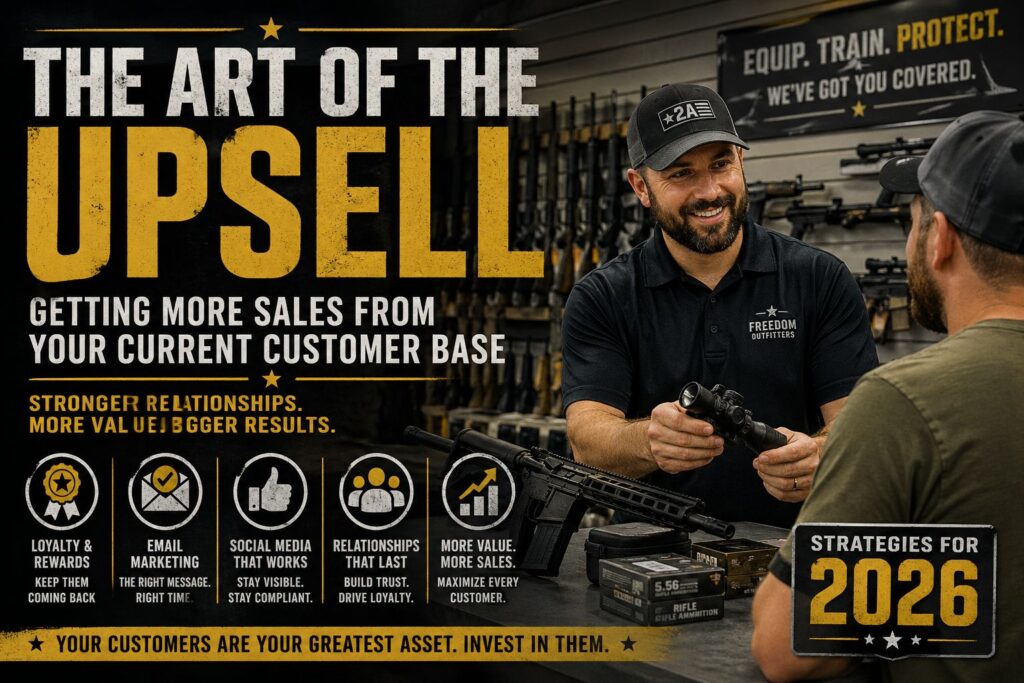
 In an industry where trust, expertise, and long-term relationships matter as much as the products themselves, often the most profitable customer is the one actually already standing at your counter. New customer acquisition is certainly a key focus area; however, smart firearms dealers recognize that growth of any kind is built on the long-term value creation from their established customer base.
Upselling isn’t about pushing unnecessary products, but offering more value, fixing more problems, and being more present in your customer’s shooting lifestyle. When done right, it promotes loyalty, raises average transaction value, and generates steady, predictable revenue. This is how today’s contemporary gun stores can master upselling in 2026 and beyond.
Develop a Loyalty Program That Really Rewards the Behavior. A well-designed rewards or loyalty program provides customers a reason to come back — and to spend more when they do. Rather than generic “points for purchases,” think about how to structure your program around engagement:
Points for purchasing articles (ammo, accessories, firearms). Bonus for attendance at training classes. Incentives for referrals. Special member-only pricing or early access to new inventory. For example, if a customer who buys a handgun now makes the purchase a reward tier, that customer will return sooner if he/she also knows that purchasing ammo, holsters, or range time also brings the customer closer to getting the reward tier. That creates upsell opportunities without being contrived.
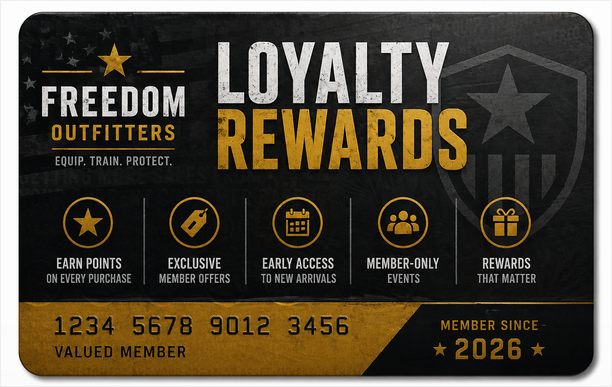
Pro tip: Tiered systems (Bronze, Silver, Gold) incentivize customers to “level up,” both in terms of frequency and basket size. Create an email account that matches your customer specifications. Email marketing with permission (and use it well). Your email list — if you create it responsibly — is one of your biggest assets.
This means:
Gather emails at checkout (with clear opt-in). A slight bonus (for example, a discount, entry into a giveaway, etc.)
Create your audience based on interests (hunters, concealed carry, competitive shooters). Once you have that list, don’t just blast promotions.
Provide value:
New product announcements (“Just in: New optics and concealed carry options”). Ammo restock alerts (huge traffic driver). Seasonal recommendations (hunting prep, summer range gear). Educational content (maintenance tips, gear comparisons). When a customer gets an email or link to a product that complements something they already own, you’re not “selling” a product to replace existing items—you’re simply assisting the user with setting themselves up. That’s upselling done right.
Keep Active – and Smart – on Social Media. Social media is great for staying visible, but firearms shops have unique challenges with platform limitations. What Works: Educational material (cleaning tips, safe storage practices). Product highlights devoid of overt “sales language.” Range videos, behind-the-scenes shots, and similar content. Community involvement (events, classes, local partnerships). What to Avoid: Direct firearm sales language like “Buy now” or “DM to purchase.” Pricing information tied to firearms (on some platforms). Anything that breaks platform policies (which can shift quite often). How to Navigate Restrictions: Instead of selling, tell the story. Drive traffic to your website or email list and never close a sale in-platform. Use compliant language like: “Now in stock.” “Available in-store.” “Check our site for details.”
The point: Ensure you are visible while avoiding getting flagged or banned. With a consistently compliant social presence, your store remains top-of-mind — so when a customer is ready to buy, they come to you.
Train Your Staff to Upsell With Expertise. Your team is your biggest asset in terms of bringing more sales. Customers walking into a gun store often expect support. This is your opportunity to: Suggest complementary gear (optics, slings, holsters, cleaning kits). Ask the right questions: “What are you planning to use this for?” “Do you already have a setup for carry/range/home defense?” Bundle, rather than selling separately.
For example: A customer purchasing a rifle may require:
Optics. Mounts. Ammo. Case. Cleaning supplies. Customers are then more likely to buy more items — and feel good about what they’re doing — when they see that it’s a complete solution.
Establish Continual Touchpoints After the Sale. The connection can continue long after the receipt is printed. Stay connected through: Follow-up emails (“How’s that new pistol working out?”). Invitations to training classes. Range events or demo days. Customer appreciation events. These touchpoints give your store relevance and an inherent avenue to introduce new products. Drive Add-Ons through In-Store Experience. Your physical store has become a key advantage compared to your online competitors. Use it strategically: Have product bundles on display. Position accessories next to primary items. Use signage to indicate pairings (“Don’t forget your range essentials”). Highlight staff picks or “most popular add-ons.” When buyers can visualize how products work together, upselling is seamless.
What That Means for Sales Growth in 2026
Even today the firearms market is changing – it has more savvy buyers and more competition from online sellers. In that environment, relationship-driven sales win. You rely on your existing customer base. Higher average order value (AOV): More items per purchase. More frequent purchases: Customers return more often. Higher customer loyalty: Reduced price sensitivity. More word-of-mouth referrals: Happy customers bring others. Rather than constantly chasing new customers, you are creating a self-sustaining ecosystem of repeat buyers. The dealers who succeed in 2026 will: Communicate consistently. Give more to customers than just the product. Make every interaction a trust-building one.
Upselling isn’t pressure—it’s service. When you understand your customers, stay in touch with them, and provide real solutions, it naturally makes sales go up. Focus on relationships, not transactions — and this is why your current customer base will be your most powerful growth engine.
For more information on products to include in your store visit www.lipseys.com and to locate a local dealer near you visit www.lipsey.com/dealerfinder