
From 2008 to 2010 S&W produced a series of revolvers called Nightguard; one, the Model 396 was built on the L-frame platform, and was in .44 Special with a 5-shot cylinder. It had a matte black finish, titanium and stainless-steel construction, and other unique features. For whatever reason, it was dropped after just two years of production. With the popularity of revolvers seemingly on the rise, at the 2026 SHOT Show, Lipsey’s reintroduced the Nightguard as an Exclusive offering in .357 Magnum (Model 386) and in .44 Special (Model 396). As a devoted fan of the .44 Special, I decided to try out the Model 396 and requested a sample gun.
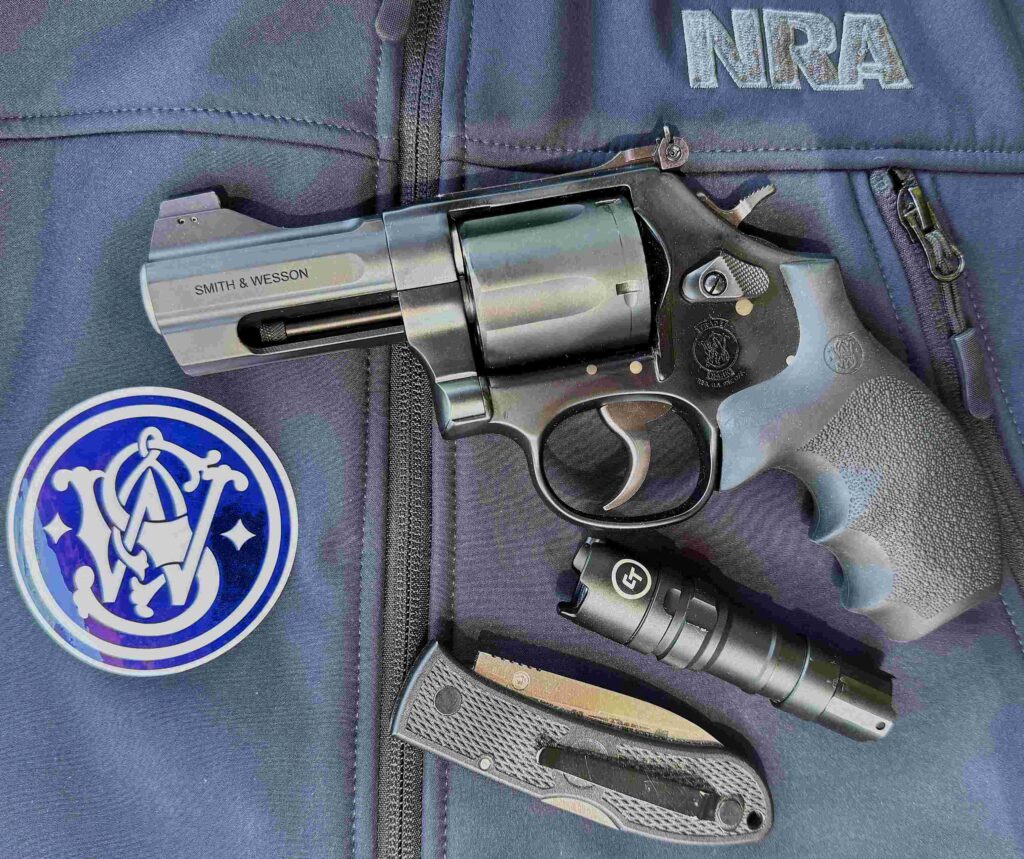
My Test Model 396 arrived in a blue plastic S&W carrying case, which has a foam rubber interior, and is lockable. Inside, besides the revolver, was a safety padlock, grip removal tool, and owner’s manual. The first thing you notice when picking up the test gun is the weight; which unloaded is just 23.04 oz. This is attributable to the scandium frame, aluminum barrel shroud, and various cuts made here and there to reduce heft. The Nightguard has a 3” stainless steel barrel with a reinforced forcing cone. It’s nestled inside the shroud, which has an integral full-length underlug, and a rib on top that incorporates a ramped sight base. You’ll also note the frame has exposed pins that are made of titanium, with a gray color for contrast.
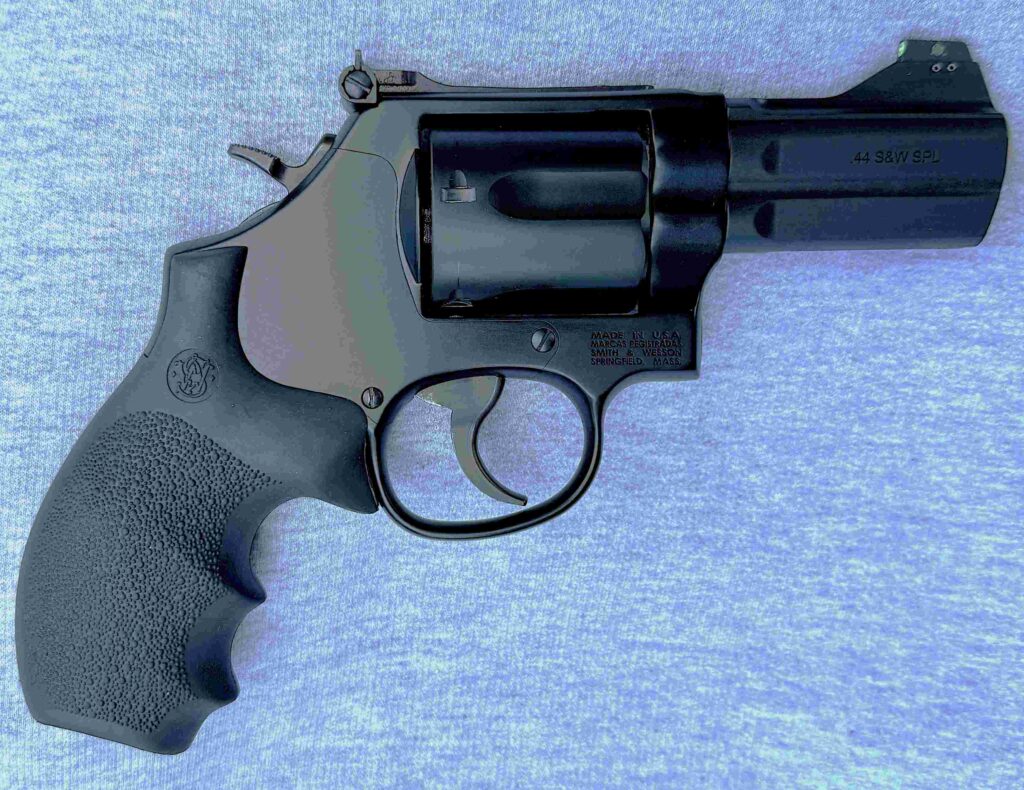
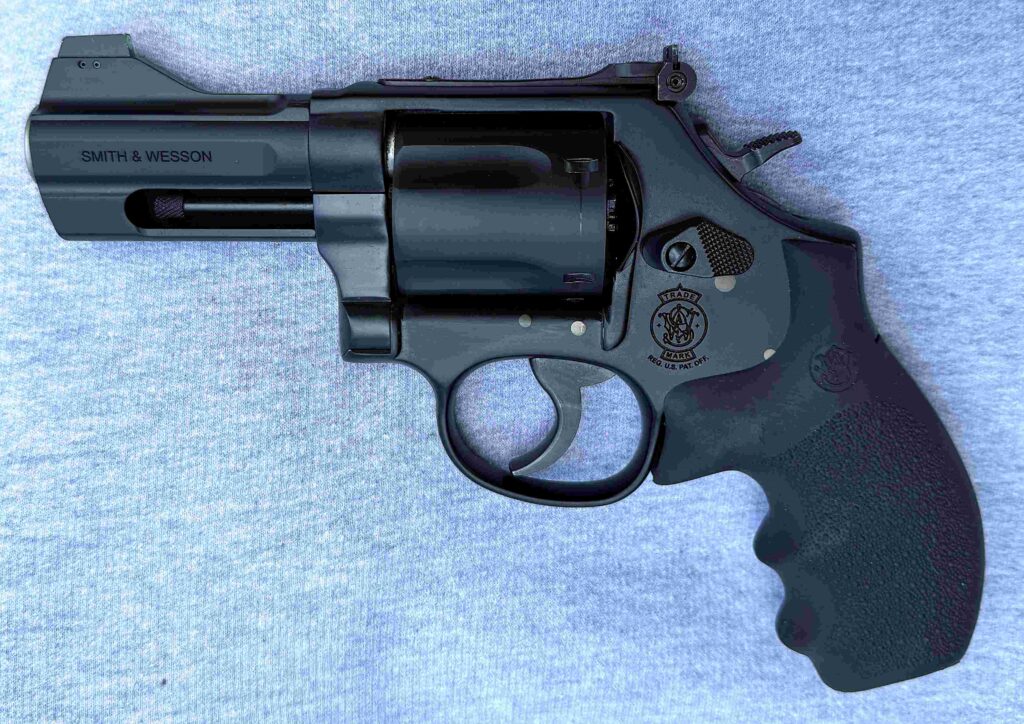
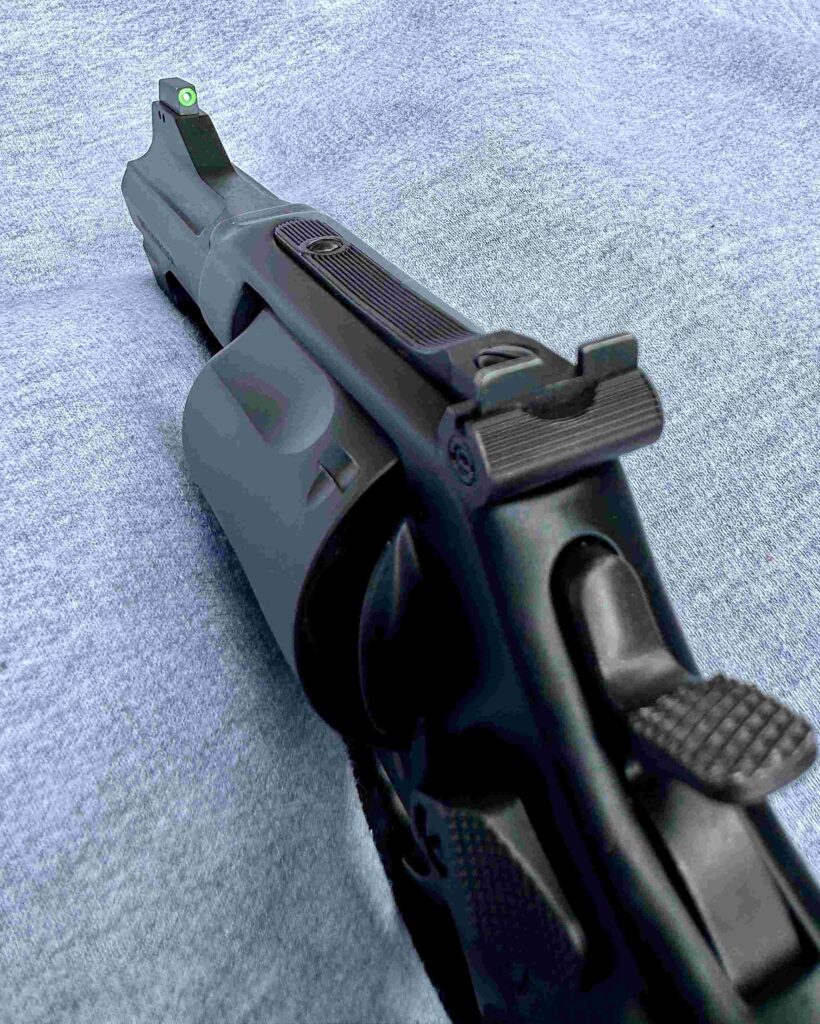
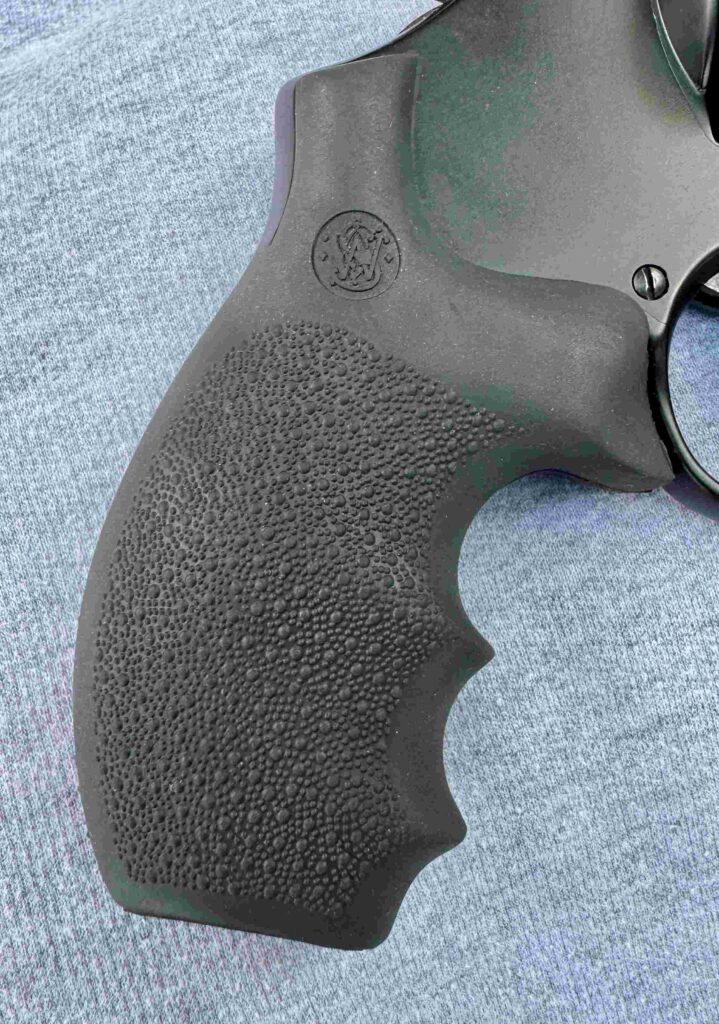
The front sight is from XS Sights and has a tritium insert surrounded by a florescent green circle. It’s attached to the barrel ramp with two tiny roll pins. The rear sight is fully adjustable for windage and elevation. The cylinder is stainless steel with a black PVD coating, and has a full-length ejector rod. There are chamfered charge holes and the front edges are beveled. Besides the locking point on the frame breech-face, the yoke/crane has an integral ball detent lock-up. Just above the barrel forcing cone on the bottom of the top-strap is a hardened steel blast shield to prevent frame cutting. The exposed hammer has a short, checkered spur, and the smooth-faced trigger is narrow. Both have a black oxide finish. According to my electronic gauge, the SA trigger pull was a crisp 3.09 lbs. and the DA was smooth, with a 9.49 lb. pull weight. A transfer bar in the action provides safety, and there’s no internal lock. The Model 396 is fitted with S&W branded Hogue Bantam rubber grips, which have finger grooves and stippling on the sides; the exposed backstrap is smooth.
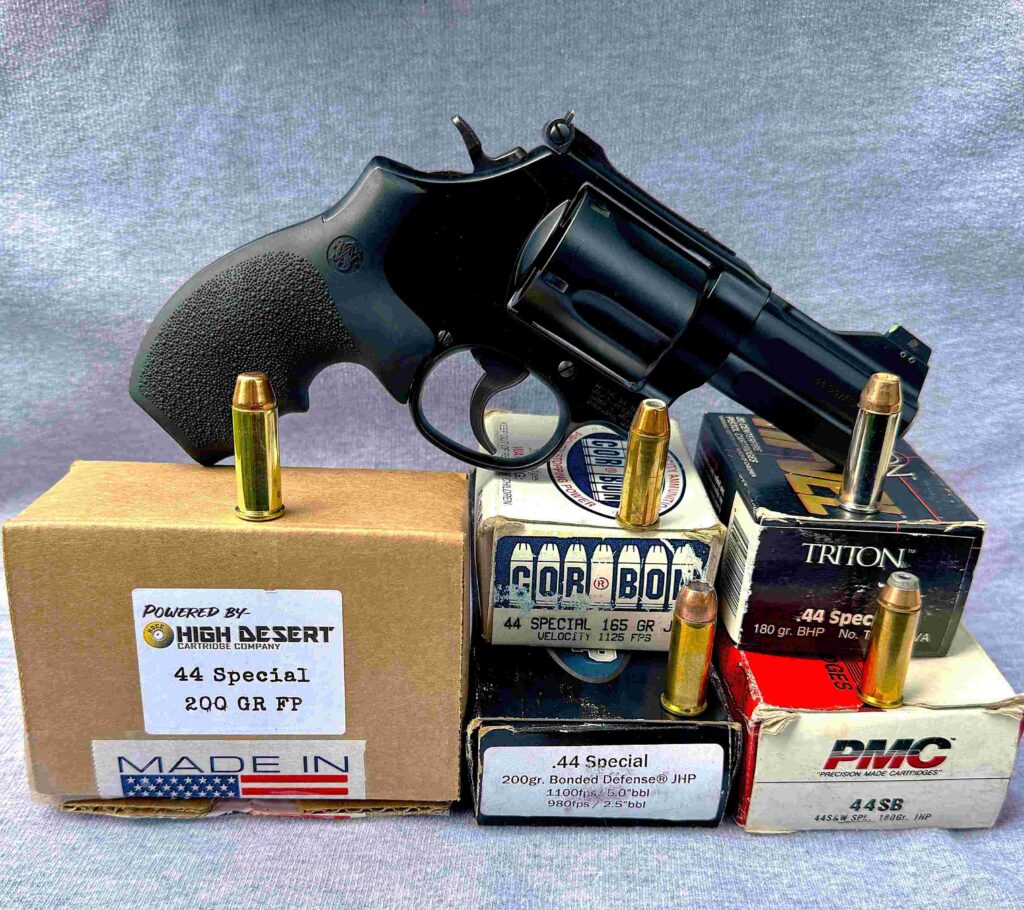
When I went to my ammo locker to find some .44 Special test cartridges, I noted that I had a few boxes were pretty aged. I decided to choose a three of these, along with some more up-to-date cartridges for the Model 396 T&E. The first load was some vintage CorBon that has a 165 gr. JHP bullet and a label showing the velocity as 1125 FPS. Next was Doubletap Bonded Defense loads with a 200 gr. JHP bullet with a listed velocity of 980 FPS from a 2.5” barrel. High Desert Cartridge Co. provided me with one of their loads that has a 200 gr. flat-nosed FMJ bullet. I also had some older PMC cartridges that have a JHP bullet with an exposed lead nose. Last, was a 20-some-odd year-old box of Triton Hi Vel that’s out of production. It has a 180 gr. Bonded JHP bullet.
I decided for range day to carry the Model 396 in a Galco Masterbilt Model L249WC Revenger holster, which is an OWB belt model. It’s a high-ride-open-top rig with a reinforced mouth and belt tunnel. This shuck is made from hand-molded premium steerhide, has a mild forward cant, and fits belts up to 1.5” wide. The belt loop to the rear of the belt tunnel pulls the butt of the revolver into your side to increase concealment. My holster was lined and tan in color. It was mated with a Galco J249WC EZ-Loader Belt Carrier; also, tan. This steerhide pouch will carry a revolver cartridge strip, and has Slot-Lock feature in back that fits belts up to 1.5.” There’s also a leather strap with a snap closure to keep the spare cartridges secure, and it’s ambidextrous. Both holster and pouch were threaded onto a Galco tan SB5 Casual Holster Belt.
At my local Range USA, the helpful counter person to put me a lane away from the other shooters so I could do my chronographing. My Garmin Xero C1 Pro chronograph will lock onto bullets from a gun fired in the next adjacent lane. While I was getting my bullet velocity measurements, I also checked the rear sight regulation with a B27 target center sent down-range to 10 yards. The bullet impacts were going to the left, so I moved the rear sight blade to the right for the proper windage adjustment. The bullet velocity data is shown in the performance table.
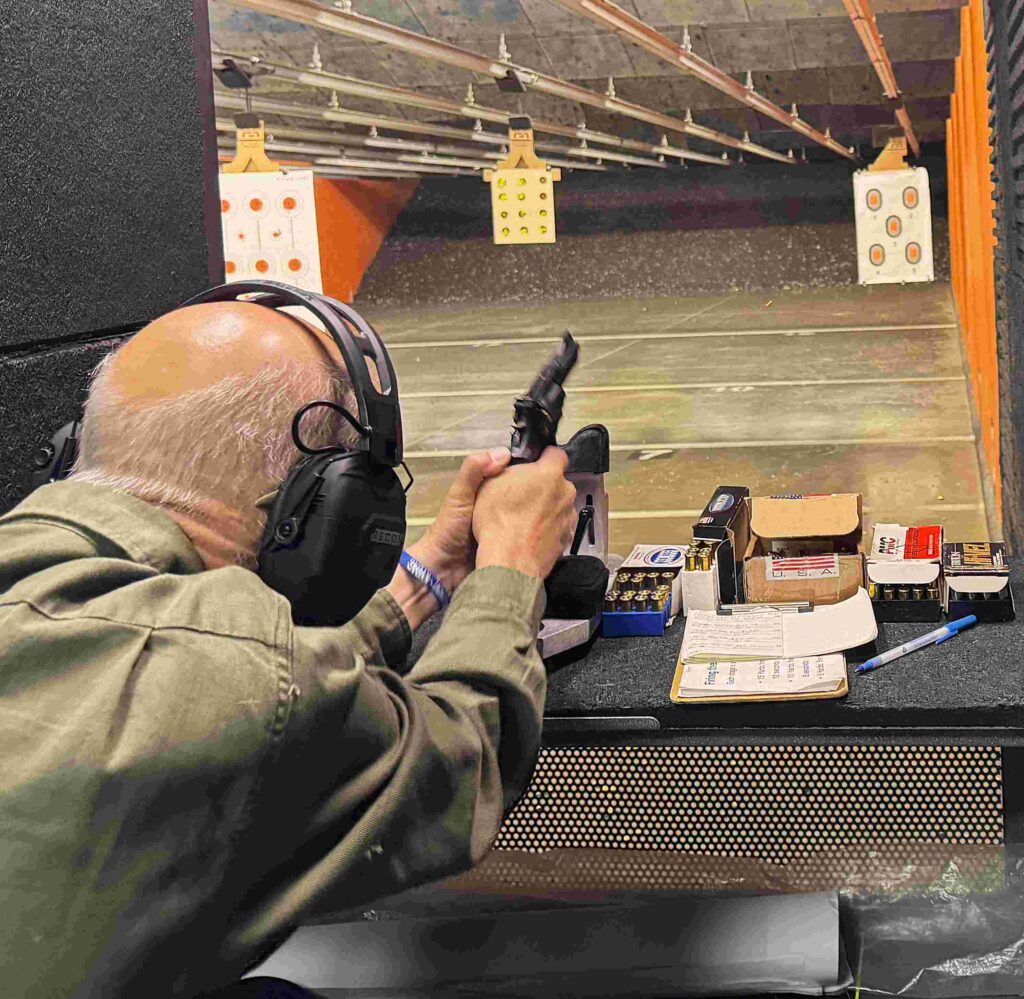
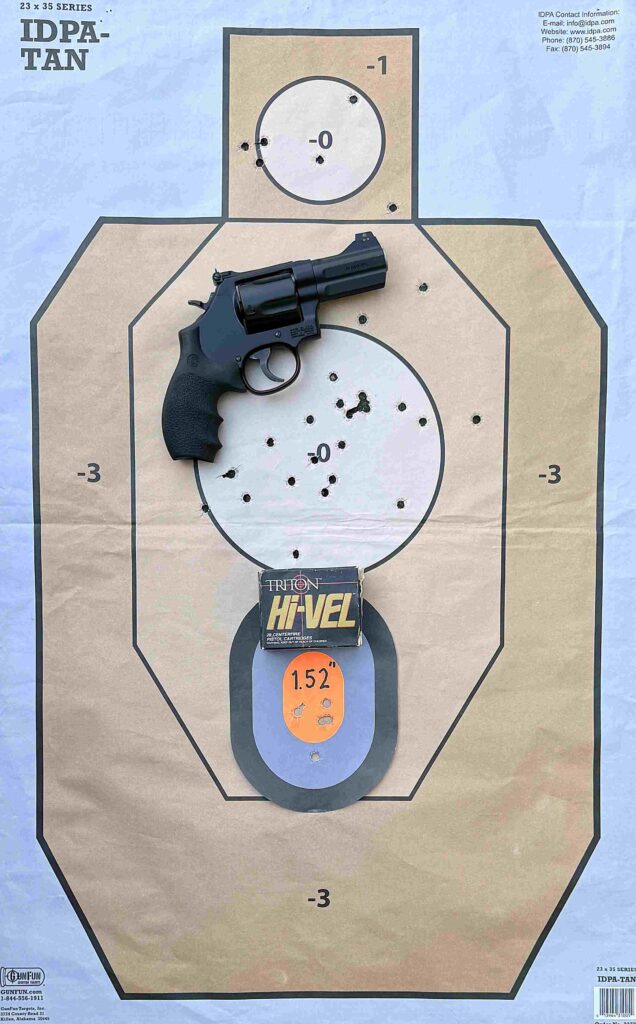
Next, was the accuracy potential evaluation. For this, I shot from the bench, single action, using a Ransom Steady Rest. Three 5-shot groups were fired with each of the .44 Special test cartridges, at a distance of 10 yards. The CorBon, PMC, and Triton loads didn’t use flash-retardant powder and produced some impressive muzzle flash. My best group measured 1.52” and was made using the elderly Triton Hi Vel cartridges. Second place went to the High Desert entry. This remaining data, plus muzzle energy calculations are also in the performance table.
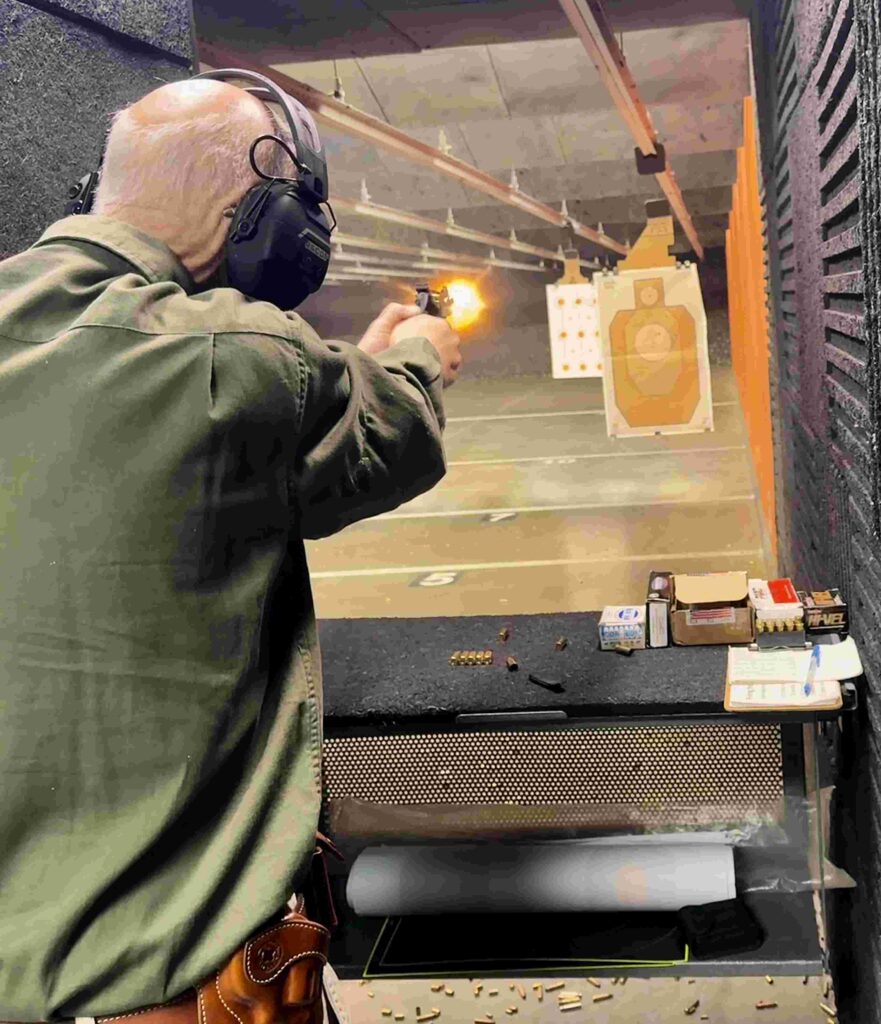
I wore my Galco leather gear to the range, and decided to do a practical shooting exercise with the Model 396 to assess its performance shooting DA from a standing, two-handed isosceles hold. I loaded the Nightguard with 5 rounds of the factory test loads, loaded up my cartridge strip, then sent a IDPA 23×35 series silhouette target down-range. I started at 5 yards, then moved the target to 7 and 10 yards. At each stage, I fired two shots center-mass at the -0 circle, then 1 shot at the -0 circle in the head, plus 2 more shots center-mass. I then reloaded with the cartridge strip and did a repeat. That amounted to 10 shots for each other the 3 distances/stages; I used the High Desert and PMC cartridges for this shooting drill.
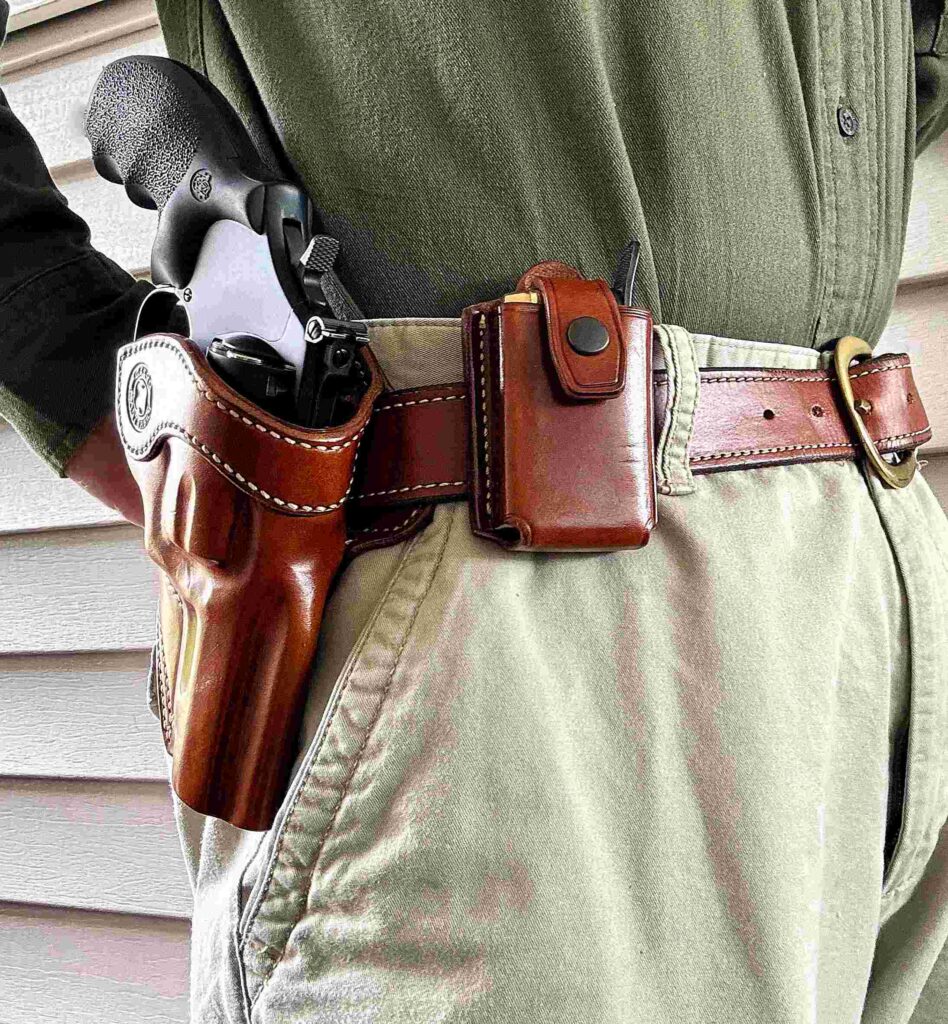
My score came to 25 out of a possible 30; as I had 5 hits in the -1 Zones, but none in the -3 Zones. The Galco rig ran just fine, and my reloads went pretty smooth as I regularly use cartridge strips with my EDC. The full-length ejector rod on the Model 396 really kicks out the spent brass. I had no malfunctions or issues that effected my shooting that day. I will say, this 23.4 oz. wheelgun is a handful after a session shooting some 110 full-charge loads! I’m not recoil sensitive, but for extended range use, milder-shooting .44 Special or .44 Russian cowboy action cartridges might be in order. The top edge of the front sight was distinct enough that I was able to get a good sight picture for accurate paper punching.
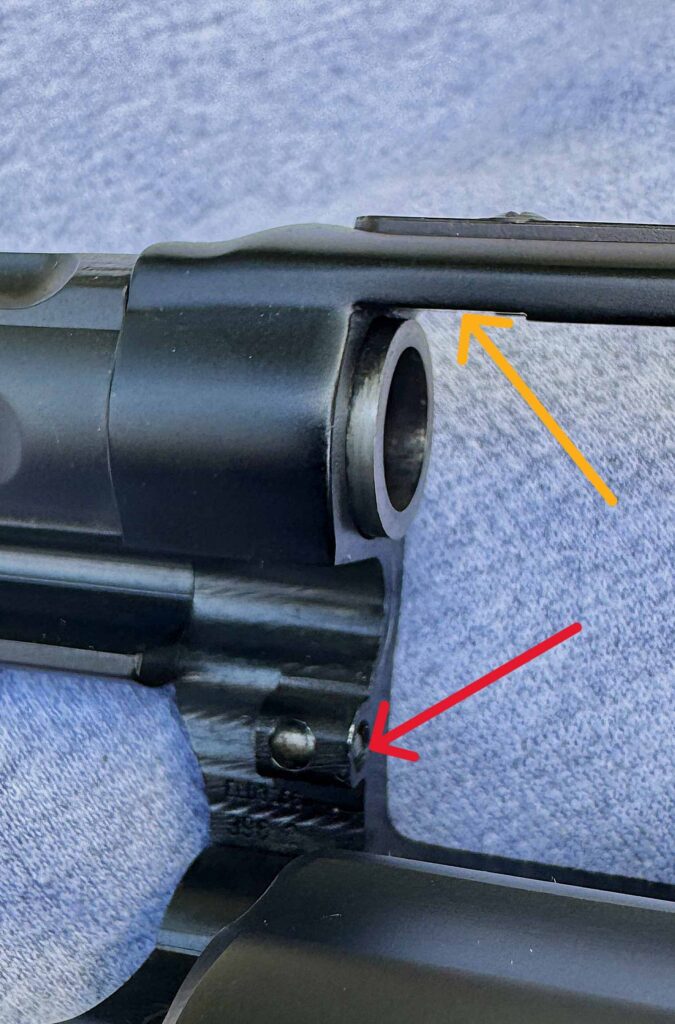
On the down side, I had to move the rear sight blade almost as far to the right as it would go to get the proper windage. While cleaning the Model 396 back at home, I made two other observations. At some point during the shooting session, the hardened steel blast shield on the bottom of the top-strap disappeared. Presumably, it’s press-fitted into a shallow slot, and it appears that the screw which attaches the rear sight to the top-strap, might also help hold it in place. However, the energetic recoil loosened that screw, which I didn’t discover until I cleaned the gun. This recoil also worked on the two small roll pins holding the front sight and they began backing out to the right of the ramp base. Obviously, a couple of items that need some attention. I’d term the Model 396 Nightguard a carry much, but shoot less often type of handgun.
Lipsey’s S&W Model 396 Specifications
MECHANISM: Traditional DA/SA revolver
CALIBER: .44 Special
CAPACITY: 5 cartridges
BARREL: 3.0”
OA LENGTH: 8.1”
EMPTY WEIGHT: 23.4 oz.
SIGHTS: XS green/tritium .130 in front, fully adjustable rear
FINISH: Matte black and PVD
STOCKS: Hogue black rudder Bantam
MSRP: $1,269.00
S&W Model 396 .44 Special Performance
| Cartridge | Ave. Velocity | Best Grp. | Ave. Grp. | Ft-Pounds Muzzle Energy |
| CorBon 165 gr. JHP | 1094 FPS | 2.35” | 2.49” | 438 FPE |
| Doubletap 200 gr. JHP | 841 FPS | 2.07” | 2.19” | 314 FPE |
| High Desert Ctg. 200 gr. FMJ | 842 FPS | 1.76” | 2.39” | 315 FPE |
| PMC 180 gr. JHP | 850 FPS | 2.34” | 2.54” | 289 FPE |
| Triton Hi Vel 180 gr. BJHP | 967 FPS | 1.52” | 2.01” | 374 FPE |
NOTE: Bullet weight measured in grains, velocity in feet per second, 15” from the muzzle by a Garmin Xero C1 Pro chronograph, and accuracy in inches for three 5-shot groups at 10 yards.
To locate a dealer near you visit www.lipseys.com/dealerfinder