
Many of us carry a firearm daily as a matter of routine. It’s only natural to have a handgun on your belt when hiking, spelunking, or simply enjoying the outdoors. I have a deep love for the outdoors—but recent incidents serve as a stark reminder that being prepared is essential.
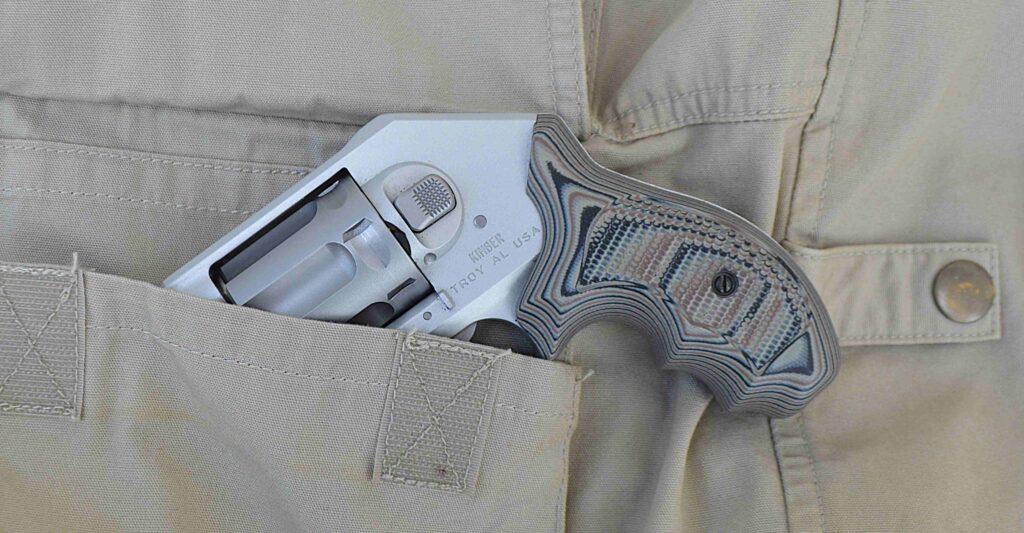
Across the country, tragedies have highlighted the importance of personal protection on the trail. In Arkansas, a man and woman were murdered in a senseless attack. In another case, a woman survived an assault because her dog—an otherwise gentle Australian Shepherd—drove the attacker away. Closer to home, a rabid bobcat attacked multiple campers. In the Pacific Northwest, a hiker was killed by a mountain lion. South Carolina’s Harbison State Forest was temporarily closed due to feral dog attacks. Even a paddleboarder in Maine was murdered.
The threat is real.
A sturdy walking stick, a knife or firearm (if you are trained to use it), and strong situational awareness are all vital components of outdoor safety.
Rising Crime in Remote Areas
Why are criminals increasingly targeting rural and remote areas?
The short answer: opportunity and lack of deterrence.
Law enforcement agencies across the country are stretched thin. Budget constraints, increased demand, and shifting priorities have led to reduced proactive policing. Specialized units are often consolidated, leaving fewer resources to address crime effectively.
A retired counselor friend and I often discuss how individuals today appear more volatile and dangerous than in years past. While most outdoor experiences are peaceful, the reality is that past incidents tend to repeat themselves.
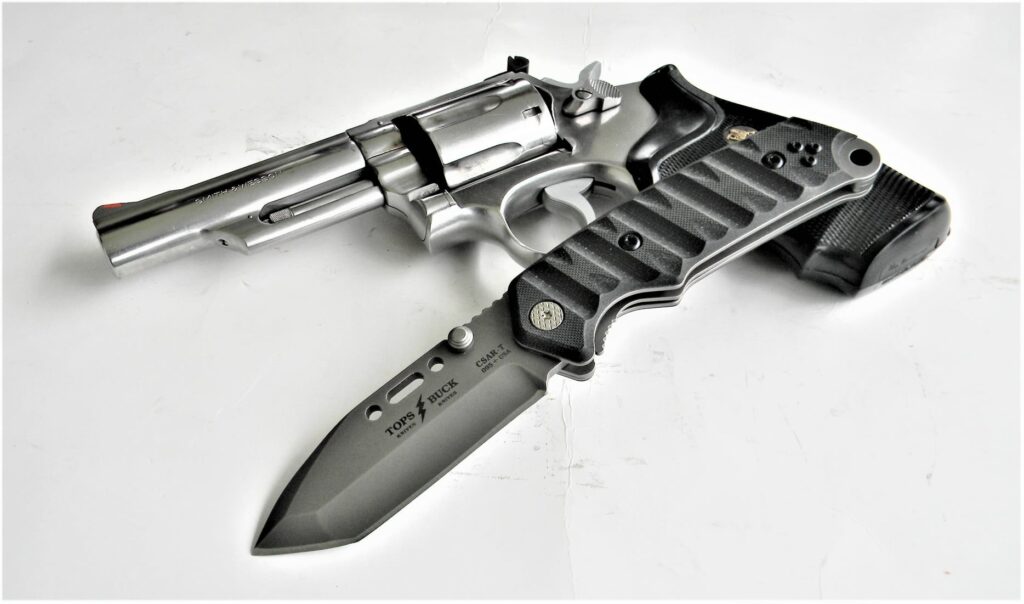
You may escape into the hills for solitude—but you should never abandon awareness.
Situational Awareness: Your First Line of Defense
The single greatest asset you can develop on the trail is situational awareness.
Some threats—like snakes—can be handled with a walking stick if necessary. Wild animals typically avoid humans, as long as you respect their space.
Humans, however, are unpredictable.
If someone behaves oddly, invades your personal space, or makes you uncomfortable, treat that as a warning sign. Create distance immediately—politely if possible, forcefully if necessary.
A walking stick is an excellent defensive tool. On hikes like the Natchez Trace or climbs such as Tri-State Peak, I’ve always carried one. Most encounters are positive—but experience and headlines remind us to stay prepared.

Choosing a Handgun for Trail Defense
Most defensive encounters on trails happen at close range—often within 10 yards or less. Whether facing a human attacker or an animal, the threat will close distance quickly.
You need a reliable, fast-handling handgun, not necessarily one designed for long-range shooting.
Key considerations:
- Quick access is critical
- Secure carry is essential (especially during falls or rough terrain)
- Practice drawing and firing under realistic conditions
A firearm buried in a backpack is useless. You should be able to draw and deliver accurate fire quickly. A good benchmark is hitting a man-sized target at 10 yards under pressure.
Carry Methods for Hiking and Outdoor Use
I typically avoid open carry while hiking but always use a secure holster. The holster should retain the firearm even during slips or falls.
Options include:
- Belt holsters
- Pocket carry (if access is fast and reliable)
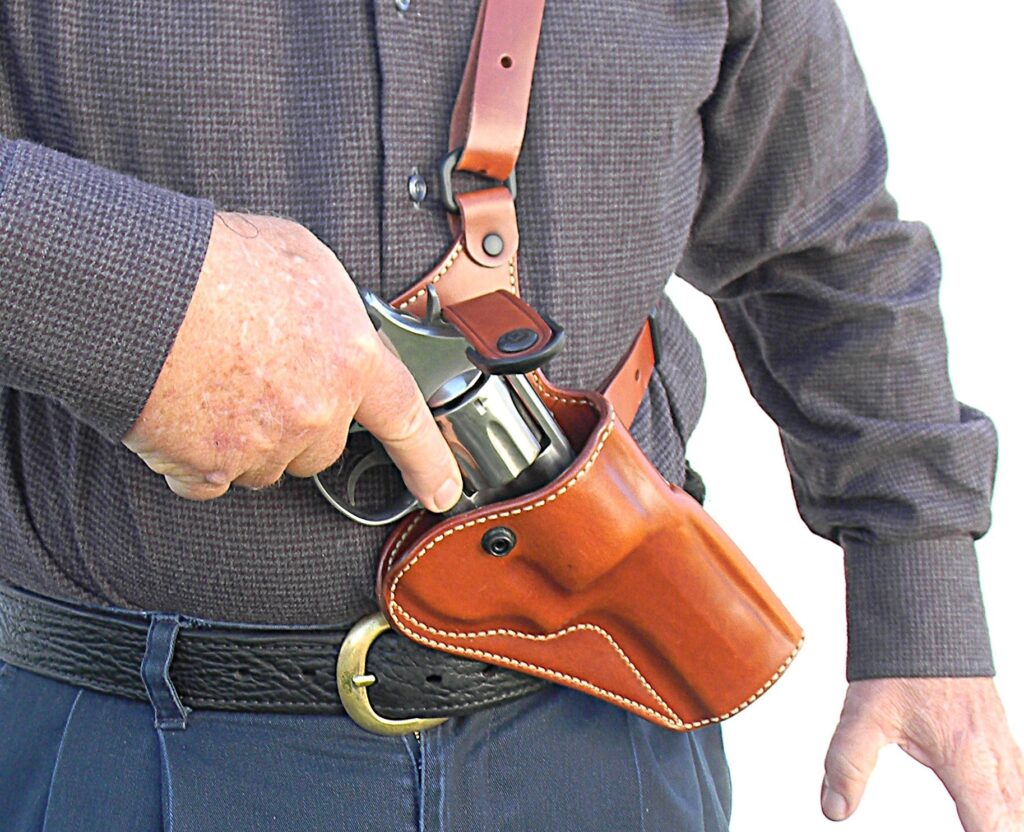
- Chest holsters (ideal for heavier firearms or bear country)
Chest holsters, like those from Galco, are especially effective when carrying larger handguns. They’ve also become more common in emergency situations, such as during hurricane response efforts.
Best Calibers for Trail Defense
For Bear Country
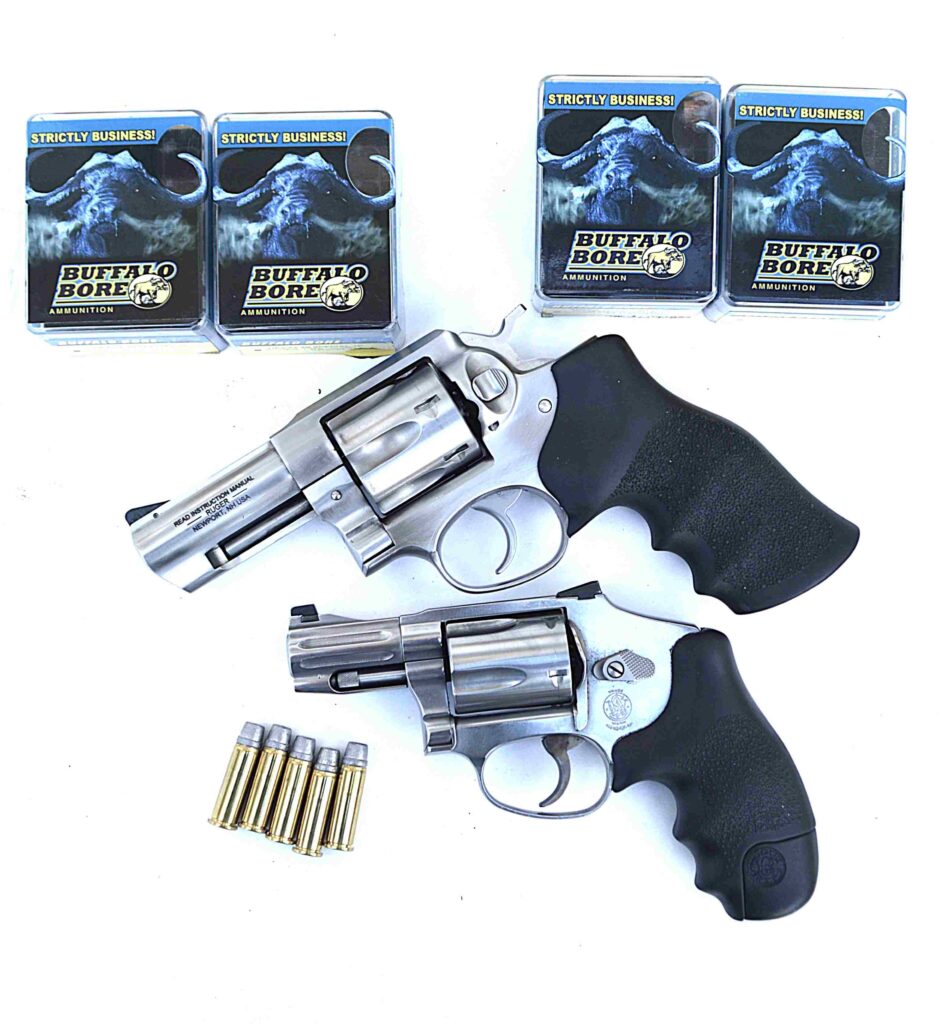
If you are in areas with large predators, a .357 Magnum loaded with hard-cast ammunition (such as Buffalo Bore Outdoorsman loads) is a practical minimum.
Avoid hollow points for large animals—penetration is critical.
For General Outdoor Defense
In most areas, human threats are more common than large predators.
Reliable options include:
- .38 Special +P
- 9mm handguns
- Compact pistols like:
- Glock 48
- SIG P365 TACOPS
- Smith & Wesson CSX
These offer a balance of:
- Manageable weight
- Adequate firepower
- Ease of carry
Revolver vs Semi-Auto for Animal Defense
Revolvers have a distinct advantage in close-contact animal attacks.
If an animal is on top of you, a revolver can be pressed into the target and fired repeatedly without malfunction. A semi-auto pistol may go out of battery and fail after the first shot in such conditions.
Ammunition Considerations
For personal defense:
- Use quality defensive loads in 9mm or .38 Special
- +P ammunition provides increased effectiveness
For mixed threats (including animals):
- Hard-cast bullets offer deep penetration
- Buffalo Bore Outdoorsman loads are a proven option
In testing, these loads have demonstrated exceptional penetration—often exceeding 40 inches in ballistic media.
My Personal Choice for a Trail Gun
Over the years, my choice has evolved.
When I was younger, I often carried a full-size 1911 in .45 ACP—the same firearm I used on duty. It served me well for both defense and even harvesting game when necessary.
Today, I prefer something lighter.
On a recent rugged hike, I carried a Smith & Wesson 640 in .357 Magnum. It’s compact, powerful, and surprisingly accurate. Most importantly, it provides real protection without adding unnecessary weight.
Did I need it? No.
But I won’t head into the outdoors without it.
The outdoors should be enjoyed—but never taken lightly.
To stay safe on the trail:
- Maintain situational awareness
- Carry appropriate defensive tools
- Practice with your equipment
- Respect both wildlife and other մարդկանց
Preparation isn’t fear—it’s responsibility.
To locate a dealer near you visit www.lipseys.com/dealerfinder